What Does “Build On Your Homesite” Actually Mean?
Build On Your Homesite means exactly what it sounds like: you already own the property, and a builder delivers a brand-new home directly on your land.
With Veev by Lennar, you’re partnering with a team that handles the entire process, from early feasibility checks through permitting, construction, inspections, and move-in day. We use a precision-built approach designed to cut down on delays, uncertainty, and the kind of disruption that makes your neighbors wonder what’s going on.
Can I Build on My Homesite? (The Quick Answer)
You can typically build on your homesite if it checks these boxes:
- Zoned for residential use
- Has legal access from the street
- Supports utilities (or can connect to them)
- Allows safe delivery and assembly of a home
That’s the elevator pitch. Now let’s get into the details.
The Build On Your Homesite Eligibility Checklist
✅ 1. Zoning & Allowable Use
Your homesite needs to allow residential construction under local zoning rules. Seems obvious, right? But here’s the thing: even if your property is zoned “residential,” there might still be constraints.
Cities and counties look at things like:
- Setbacks (how far your home needs to be from property lines)
- Height limits (because nobody wants a five-story house blocking their view)
- Floor area rules (how much of your property you can actually build on)
- Design or neighborhood compatibility requirements (varies by jurisdiction—some cities care about this more than others)
The takeaway? Confirming zoning early saves you headaches later.
✅ 2. Legal Access to the Homesite
Your property needs legal access from the street. This usually means:
- A public or private road connection
- Adequate width and clearance for construction vehicles (not just your sedan)
- No unresolved easements blocking required access
If emergency vehicles can reach your homesite, that’s a good sign, but construction access is a different animal. We’re talking trucks, cranes, and equipment that need room to maneuver.
✅ 3. Utilities
Most homesites need to support the basics:
- Water
- Sewer
- Electrical service
Now, if your property doesn’t have utilities connected right now, don’t panic. That doesn’t automatically disqualify you. The key variables are distance, trenching requirements, and what your local jurisdiction allows. It’s solvable, you just need to know what you’re working with.
✅ 4. Truck Delivery + Crane Fit (Often Overlooked)
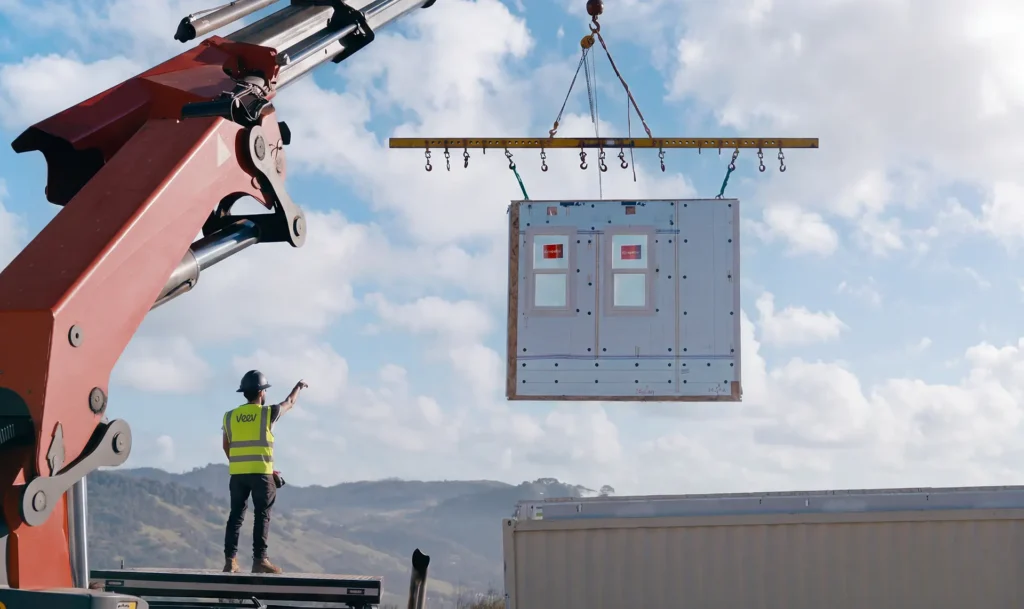
Here’s where things get interesting. Because Veev homes are assembled from precision-built components, your homesite needs to allow:
- Truck access for delivery
- Space for a crane during installation
Before you worry—this does not require a massive property. But you do need clear access, a workable turning radius, and a staging area. This is especially important in established neighborhoods where driveways and trees can complicate things.
✅ 5. Site Conditions (Slope, Soil, Existing Structures)
Feasibility also depends on what your homesite needs before construction can even begin. Think:
- Demolition of existing structures (if there’s an old house or garage)
- Grading and drainage (to make sure water flows the right direction)
- Soil conditions that impact foundation requirements
- Utility trenching and connections
Evaluating these early helps you avoid timeline surprises down the road. Nobody likes finding out mid-project that the soil needs remediation.
Typical Timeline & What to Expect
One of the most common questions we get is: “How long does this actually take?”
Here’s the typical breakdown:
- Pre-construction: ~6 months (city-dependent; includes permitting)
- Construction: ~4 months from permit approval
You’ll also receive ongoing itemized reports throughout the process for complete cost transparency. No surprises, no “we’ll tell you later” moments.
What Kind of Home Can You Build? (Example: Model X)
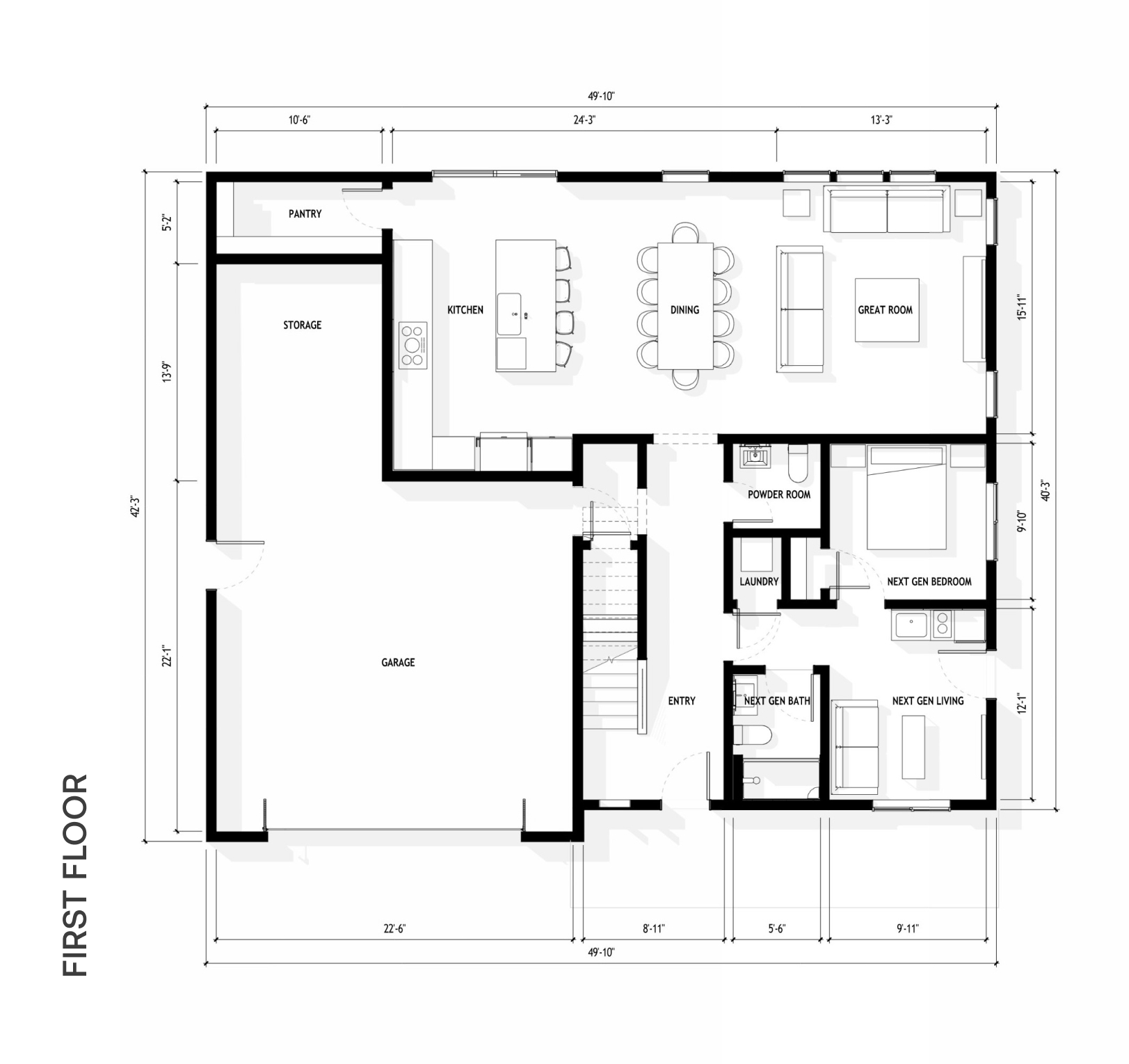
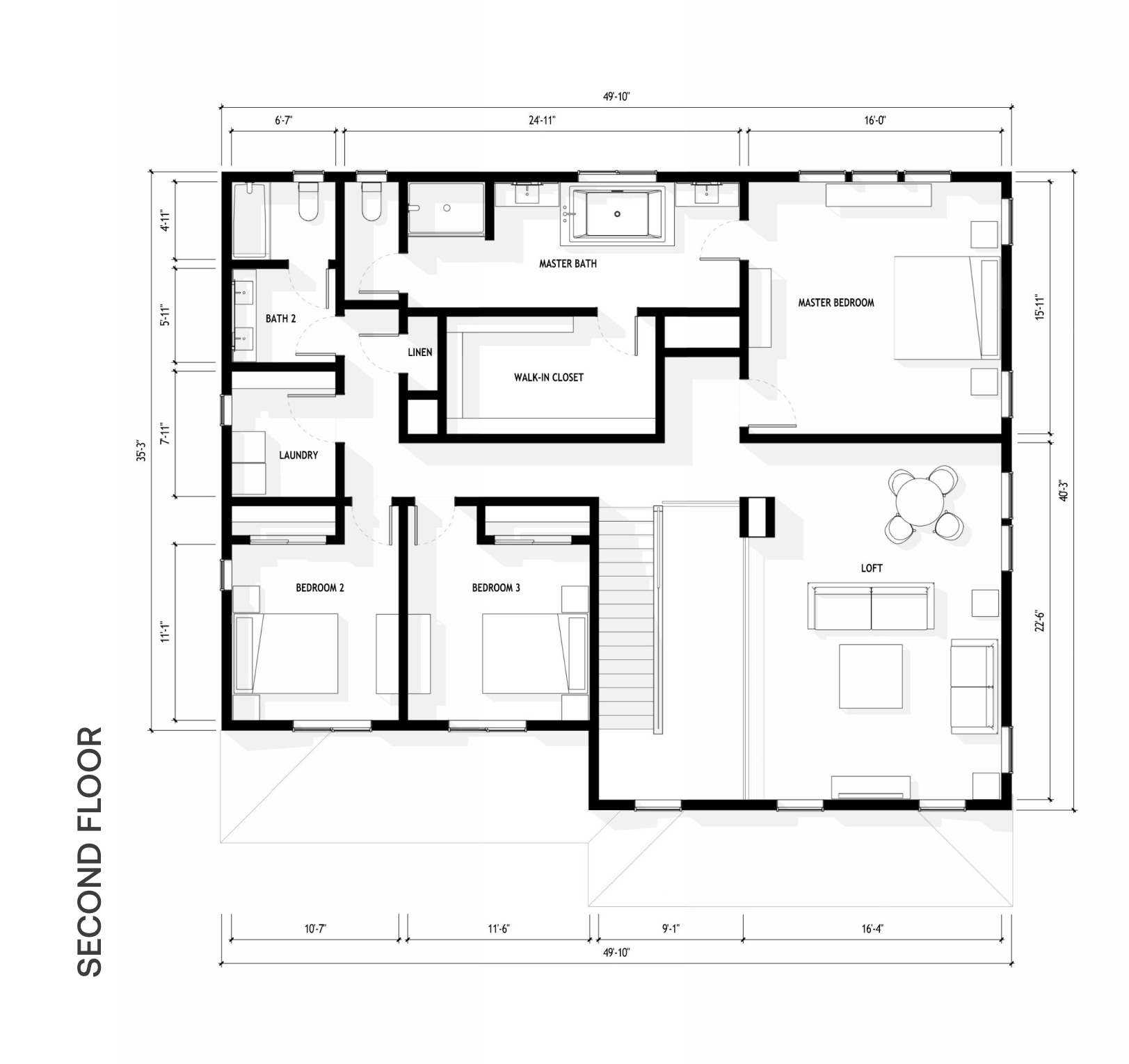
Let’s get specific. One example is Veev’s Model X, a modern home designed for comfort, sustainability, and long-term durability.
Model X highlights:
- 3,045 sq ft with 4 bedrooms / 3.5 bathrooms
- All-electric + solar installed (because energy bills are already high enough)
- EV charging ready (future-proofed for the cars we’ll all be driving)
- Light-gauge steel framing — strong, non-combustible, and resistant to rot, water, and termites
- Closed-wall panel system integrating mechanical, electrical, and plumbing systems under tight quality control
- Fire-resistant exterior elements designed to help resist embers and radiant heat (a big deal in California)
- Warranty coverage including 1-year fit & finish and 10-year structural
To support speed and price certainty, Veev’s pre-engineered designs limit structural or floor plan changes. It’s about efficiency and getting you into a high-quality home faster, not endless customization that adds months to the timeline.
Cost Transparency & Optional Financing
Build On Your Homesite is designed to eliminate the “unknowns” homeowners often associate with building. You know the ones: unexpected costs, shifting timelines, contractors who vanish for weeks at a time.
Here’s what you get instead:
- Clear pricing and milestones
- Up-front feasibility review
- Fixed-price contracting approach
- Optional financing available (subject to terms and final agreements)
As always, timelines and pricing are subject to jurisdiction, site conditions, and final agreements, but the goal is to remove as much uncertainty as possible from the beginning.
Why Homeowners Choose Build On Your Homesite
Homeowners explore Build On Your Homesite because it offers:
- A faster path to move-in readiness compared to traditional builds
- More predictable outcomes, with fewer handoffs across multiple vendors (and fewer opportunities for things to go sideways)
- Reduced disruption through efficient delivery and assembly
- A single team coordinating feasibility, permitting, fabrication, and construction
It’s a modern approach to building on your own property; it’s built around clarity, quality control, and a smoother experience from start to finish.
Ready to See if Your Homesite Qualifies?
If you’re still wondering, “Can I actually build on my homesite?”, the most efficient next step is a feasibility check.
Request a free homesite review to confirm eligibility and understand what’s possible on your property before you commit to permitting or design decisions. It’s free, it’s fast, and it gives you clarity on what comes next.